
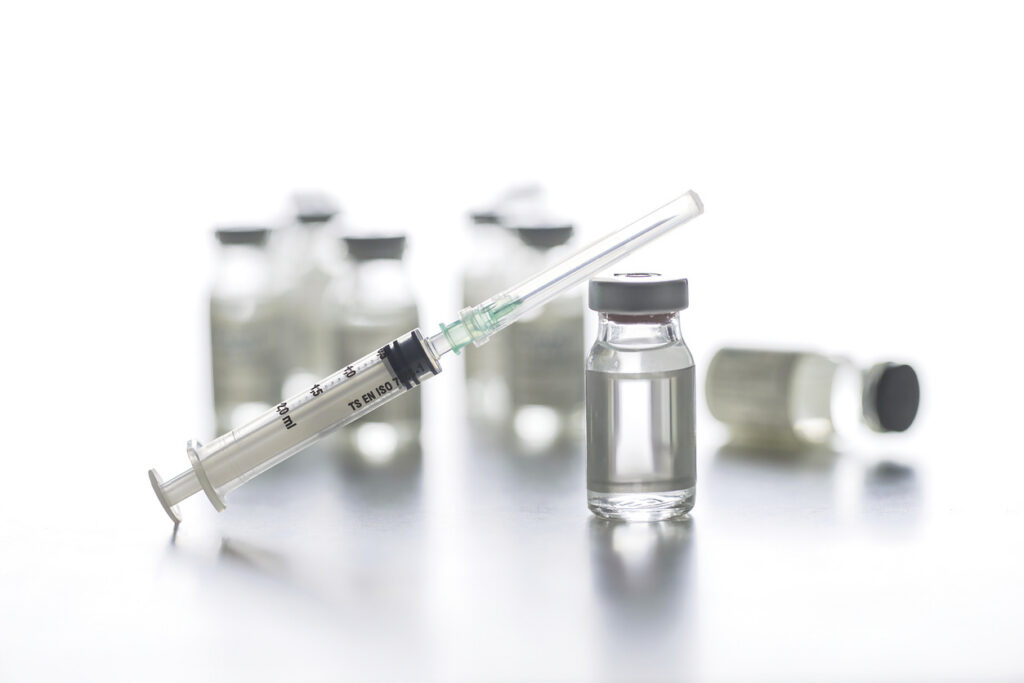
People living with mesothelioma or asbestos-related lung cancer have little lung reserve to spare, which makes flu, COVID-19, and pneumonia far more dangerous than they would be for a healthy adult. Vaccination is the most effective protection available. Because some vaccines cannot be given during treatment, protecting the household matters as much as protecting the patient.
Why does a routine infection hit harder after an asbestos diagnosis?
A healthy set of lungs has margin. When infection inflames the airways and fills part of them with fluid, there is enough unaffected tissue left to carry the load while the body clears it.
Asbestos disease takes that margin away. Pleural thickening, recurring effusions, surgery, and radiation all reduce how much lung is available to work with. Chemotherapy and immunotherapy add a second problem by suppressing the immune system that would otherwise fight an infection off early. Put those together and an illness a coworker would shrug off over a long weekend becomes a hospital admission.
That is the whole case for vaccination in this population, and it is a stronger case than the one for the general public. The people with the least room for error get the most benefit from not catching these illnesses at all.
Which vaccines are safe during cancer treatment?
The ones that come up most often for adults with lung disease are influenza, COVID-19, pneumococcal pneumonia, and RSV. All are non-live vaccines, and non-live vaccines are generally considered safe for people undergoing cancer treatment. The same is true of the current shingles vaccine, which replaced an older live version several years ago.
Two practical details matter. The injectable flu vaccine is non-live, but the nasal spray version is live and is not appropriate for someone whose immune system is suppressed. And a vaccine given during active treatment may produce a weaker response than it would in a healthy adult, which is why oncologists often think carefully about where in a treatment cycle to schedule one.
None of that is a reason to skip vaccination. It is a reason to plan it with the treating physician rather than walking into a pharmacy without a conversation first.
Why can’t some patients get the measles vaccine?
The MMR vaccine uses a weakened live virus. In a healthy immune system that produces strong, durable protection. In a significantly weakened one, the vaccine virus itself can cause an infection the body cannot control, so MMR is generally withheld during chemotherapy and for a period afterward.
That leaves a real gap at a bad time. Someone vaccinated in childhood may still be protected, but treatment can erode that protection, and there is no straightforward way to restore it mid-treatment. Measles is not a childhood nuisance in this context. It causes pneumonia, and pneumonia is what makes it lethal for someone whose lungs are already compromised. It is also one of the most contagious diseases known, and it spreads through the air well before anyone shows a rash.
The protection has to come from somewhere else, and that somewhere else is the household.
What can family members and caregivers do?
Guidance from the CDC and from oncology organizations is consistent here. Close household contacts and caregivers of immunocompromised patients should be up to date on their own age-appropriate vaccinations, including MMR. The question families ask most often is whether a recently vaccinated relative could pass the vaccine virus to the patient. For MMR, that risk is considered very low, and it is far outweighed by the protection that comes from not carrying measles into the house.
There are two narrow exceptions worth raising with the care team. A household member who develops a rash after the chickenpox vaccine should stay away until it clears, and anyone who chooses the nasal spray flu vaccine should avoid close contact for about two weeks. The injectable flu vaccine carries no such restriction.
If a patient with a weakened immune system is exposed to measles, the care team needs to know the same day. There are protective treatments that work only within a narrow window after exposure.
What has changed in federal vaccine policy?
This is harder to navigate than it was two years ago, and that is not the patient’s fault.
For more than sixty years, federal vaccine recommendations came out of the Advisory Committee on Immunization Practices, a standing body of immunization experts that reviewed the evidence and advised the CDC. Since February 2025, that process has been repeatedly bypassed. The sitting ACIP members were removed in June 2025 and replaced with thirteen new appointees. COVID-19 vaccination was downgraded from a routine recommendation to shared clinical decision making. In January 2026, the CDC adopted a revised childhood immunization schedule that federal officials wrote without the committee, cutting routine recommendations from seventeen to eleven and moving others into the shared decision making category.
In March 2026, a federal judge in Massachusetts stayed both the revised schedule and the thirteen appointments, finding that the government had likely violated the law by sidestepping the committee Congress designated for this purpose, appointing members without following required process, and failing to give the reasoned explanations the law demands. The schedules reverted to their 2025 versions. HHS then rewrote the ACIP charter to loosen the expertise requirements for future appointees, and appealed part of the ruling. The litigation is ongoing.
We are a law firm, not a public health agency, and we read this the way we read any agency action: process exists for a reason, and skipping it produces bad outcomes. A court has already found this process likely unlawful.
What does that mean for a patient trying to make a decision?
Three things, practically.
First, do not assume the recommendation you remember still applies. Eligibility for COVID-19 vaccination in particular has moved more than once. Ask your care team what is recommended and available right now rather than relying on last season’s rules.
Second, watch coverage. Insurance coverage for vaccines is tied by law to ACIP recommendations, so when those recommendations are unsettled, payment can be too. If a pharmacy tells you a vaccine is not covered, that is worth a call rather than an assumption.
Third, notice that the major medical organizations have not gone quiet. The American Academy of Pediatrics, the American College of Physicians, the American Lung Association, and the oncology societies have continued to publish their own guidance, and in several cases it diverges from what federal officials issued. Your oncologist is working from that body of guidance. Ask them directly.
This post is general information, not medical advice. Vaccination decisions during cancer treatment depend on the diagnosis, the treatment, and the patient’s overall health, and belong to the treating physician.

 Johnson & Johnson’s $5.5 Billion Talc Settlement: What It Does Not Cover